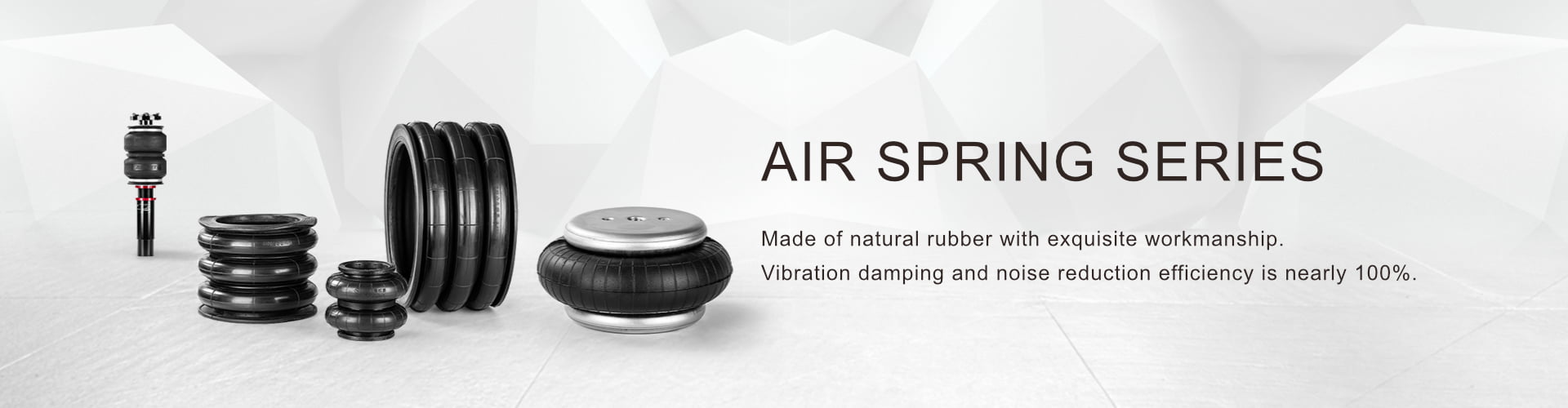
How Advanced Air Isolation Technology Is Transforming Modern Manufacturing
How Air Isolators Are Transforming Precision Manufacturing
Engineering insights into low-frequency vibration isolation, pneumatic control, and the future of high-precision industrial equipment.
Modern manufacturing is entering an era in which precision is no longer measured only in micrometers. Semiconductor inspection, optical metrology, advanced microscopy, and precision positioning systems increasingly require stable operating environments where even small mechanical disturbances can affect measurement repeatability and production quality.
As manufacturing equipment becomes more sensitive, conventional structural support and vibration damping solutions may no longer provide adequate isolation across critical frequency ranges.
This challenge has accelerated the development of air isolators, also known as pneumatic vibration isolators, which use compressed air and carefully engineered mechanical structures to reduce vibration transmission between equipment and its supporting foundation.
For modern industrial manufacturers, air isolation is evolving from an optional accessory into an important part of precision system engineering.
1. Why Vibration Control Is Becoming Critical in Advanced Manufacturing
Industrial facilities contain numerous sources of mechanical vibration, including HVAC equipment, pumps, compressors, automated transport systems, machine tools, and nearby production machinery.
These disturbances can propagate through floors, foundations, and supporting structures before reaching sensitive equipment.
In semiconductor inspection systems, vibration may cause relative displacement between optical components and the wafer surface. In coordinate measuring machines (CMMs), environmental vibration can influence probing stability and measurement repeatability.
For optical instruments, even relatively small angular or translational movements may interfere with measurement performance.
The challenge is not simply to reduce vibration amplitude. Engineers must understand the vibration frequency spectrum, equipment sensitivity, structural resonance, and interaction between the isolator and the supported machine.
An effective vibration isolation system therefore requires an integrated engineering approach.
2. How Does an Air Isolator Work?
An air isolator supports equipment using compressed air contained within a flexible chamber, diaphragm, or air spring.
The pneumatic chamber provides a compliant supporting element. By controlling the effective air volume, operating pressure, geometry, and mechanical damping, engineers can influence the system’s natural frequency and dynamic response.
Unlike a conventional rigid mounting system, a properly designed pneumatic isolator allows controlled movement while reducing the transmission of vibrations above its resonance region.
The fundamental natural frequency of an ideal single-degree-of-freedom isolation system is expressed as:
Where:
-
\(f_n\) = Natural frequency (Hz)
-
\(k\) = Effective dynamic stiffness (N/m)
-
\(m\) = Supported mass (kg)
A lower natural frequency generally improves isolation from sufficiently high-frequency disturbances. However, lower stiffness also increases the potential for motion near resonance and under changing loads.
For pneumatic systems, effective stiffness depends on chamber geometry, air volume, thermodynamic behavior, diaphragm characteristics, and other structural effects.
Consequently, selecting an air isolator based only on nominal load capacity is insufficient.
3. The Engineering Breakthrough: From Passive Support to Intelligent Isolation
One of the most important developments in vibration control is the integration of pneumatic isolation with sensing, leveling, and feedback control.
Traditional passive isolation systems primarily rely on mechanical stiffness and damping. Advanced systems can additionally incorporate position sensors, proportional valves, accelerometers, and electronic controllers.
These technologies create several engineering opportunities.
Adaptive Load Leveling
Precision equipment may experience changing loads during operation, particularly when moving stages, robotic mechanisms, or workpieces shift the center of gravity.
Pneumatic leveling systems can adjust chamber pressure to maintain a desired equipment height within the system’s operating limits.
Multi-Axis Vibration Management
Real manufacturing equipment is not limited to vertical vibration.
Horizontal translation, pitch, roll, and yaw can also affect sensitive instruments. Multi-point air isolation platforms must therefore consider the combined stiffness matrix, center of gravity, mounting geometry, and coupled vibration modes.
Sensor-Assisted Vibration Control
An active vibration isolation system can use accelerometers or other sensors to measure disturbances and generate corrective forces through suitable actuators.
Importantly, pneumatic automatic leveling alone does not make an isolator an active vibration cancellation system. True active isolation requires a control architecture capable of dynamically counteracting disturbances.
Data-Driven Condition Monitoring
Future vibration isolation systems can integrate vibration sensors with industrial monitoring platforms to identify changing environmental conditions, abnormal resonance, and potential equipment-support problems.
Such systems can contribute to predictive maintenance and improved process stability when supported by appropriate measurement and analysis methods.
4. Understanding Vibration Transmissibility
One of the most useful engineering parameters in vibration isolation is transmissibility.
For an ideal linear, viscously damped single-degree-of-freedom system under harmonic base excitation, displacement transmissibility can be expressed as:
Where:
-
\(T\) = Vibration transmissibility
-
\(\zeta\) = Damping ratio
-
\(r=f/f_n\) = Frequency ratio
-
\(f\) = Excitation frequency
-
\(f_n\) = Natural frequency
When transmissibility is below 1, vibration amplitude transmitted through the system is reduced relative to the base excitation under the stated model assumptions.
For this model, isolation begins when the excitation frequency exceeds approximately \(\sqrt{2}\) times the natural frequency.
Illustrative engineering example
Consider a pneumatic isolator with a natural frequency of 2 Hz and a damping ratio of 0.10.
0246123468101520
Ideal linear SDOF base-excitation model; illustrative calculations, not measured product data.
Frequency in Hz. The resonance peak demonstrates why low natural frequency alone does not guarantee good isolation across all operating conditions.
This analysis highlights an important engineering principle: isolation performance must be evaluated over the relevant disturbance spectrum, rather than at one selected frequency.
Actual pneumatic isolators may exhibit nonlinear stiffness, frequency-dependent damping, and multiple coupled modes that require more detailed testing.
5. Air Isolators vs. Conventional Spring and Rubber Isolators
Different vibration isolation technologies serve different operating conditions.
| Technology | Typical strength | Important consideration |
|---|---|---|
| Rubber isolator | Compact, simple, economical | Dynamic stiffness and material properties vary with frequency and temperature |
| Steel spring isolator | High load capacity and useful low-frequency performance | Resonance control and lateral stability require attention |
| Pneumatic air isolator | Adjustable support characteristics and potentially very low natural frequencies | Requires suitable air supply and pneumatic control |
| Active isolation system | Can suppress selected disturbances using feedback control | Greater complexity, power and control requirements |
Air isolators are particularly attractive where low-frequency floor disturbances are important and the equipment requires a stable operating height.
However, no single isolation technology is universally superior. Engineering selection must account for vibration spectrum, payload, environmental conditions, installation space, maintenance requirements, and cost.
6. Where Are Air Isolators Used in Modern Manufacturing?

Semiconductor Manufacturing
Wafer inspection platforms, lithography-related metrology equipment, precision alignment systems, and optical inspection instruments can require carefully controlled vibration environments. Pneumatic isolation may reduce floor-transmitted disturbances within its designed frequency range.

Precision Metrology
Coordinate measuring machines, laser interferometers, surface profilometers, and dimensional inspection equipment benefit from stable supporting structures that minimize environmental disturbances.

Electron Microscopy and Scientific Instruments
Scanning electron microscopes, transmission electron microscopes, and high-resolution analytical instruments can be sensitive to low-frequency movement and structural resonance. Vibration isolation is one component of a broader environmental control strategy.

Advanced Industrial Automation
Precision assembly stations, optical alignment systems, and automated measurement platforms may use pneumatic isolation where floor vibration affects repeatability. Equipment-generated motion must also be considered during system design.
7. How to Select the Right Pneumatic Vibration Isolator
A successful isolation system begins with understanding the application rather than selecting a product solely from a catalog.
Engineers should evaluate the following design parameters:
-
Total equipment mass and center of gravity: Determine the actual load distribution across all mounting points.
-
Vibration frequency spectrum: Identify the frequencies and amplitudes of environmental or equipment-generated disturbances.
-
Required isolation performance: Define acceptable vibration levels at the equipment’s sensitive locations.
-
Vertical and horizontal stiffness: Evaluate translational and rotational natural frequencies, not only vertical performance.
-
Air pressure and supply stability: Confirm the required pressure, air quality, reservoir configuration, and pneumatic control strategy.
-
Installation conditions: Consider available height, floor stiffness, utilities, mechanical restraints, and maintenance access.
-
Dynamic operating loads: Account for moving stages, transient forces, startup conditions, and changes in payload.
For critical precision systems, measured floor vibration data and equipment-specific vibration acceptance criteria should be used whenever available.
8. The Future of Air Isolation: Smarter, More Integrated Manufacturing Systems
As precision manufacturing continues to advance, vibration isolation engineering is expected to become more closely integrated with machine design and facility monitoring.
Three directions are especially important.
First, hybrid passive-active isolation architectures can combine the low-frequency mechanical characteristics of pneumatic supports with feedback-based disturbance suppression.
Second, multi-axis system modeling can help engineers account for coupled vibration modes, dynamic payload shifts, and interactions between machine structures and their foundations.
Third, condition monitoring and digital analysis can make vibration performance easier to evaluate throughout the equipment lifecycle.
These developments represent meaningful opportunities for improved vibration management. However, the benefits of each technology must be established through system-level analysis and application-specific validation.
The next generation of air isolation systems will not simply support machinery. They will increasingly form part of the broader precision engineering architecture.
9. Frequently Asked Questions About Air Isolators
What is the difference between an air isolator and an air spring?
An air spring is a pneumatic elastic component that supports a load using compressed air. An air isolator is a vibration isolation assembly or system that may incorporate an air spring together with structural housings, damping mechanisms, leveling valves, reservoirs, and other components.
Not every air spring is designed or qualified for precision vibration isolation. The complete system’s dynamic behavior determines its suitability.
Can air isolators isolate vibrations below 5 Hz?
Yes, properly engineered pneumatic isolation systems can be designed with low natural frequencies suitable for attenuating some disturbances below 5 Hz.
However, isolation performance depends on the relationship between the disturbance frequency and the system’s natural frequency. A system with a 2 Hz natural frequency, for example, does not effectively isolate disturbances at its own resonance.
Very-low-frequency applications may require specialized pneumatic configurations, additional damping, or active isolation technologies.
Do pneumatic vibration isolators require continuous compressed air?
Many pneumatic systems require a regulated compressed-air supply for initial inflation, automatic leveling, and compensation for leakage or changing loads.
Some configurations can maintain pressure for a period without continuous airflow, but their operating stability depends on leakage characteristics, pressure regulation, temperature variation, and system design.
The required air supply should be established from the manufacturer’s technical specifications.
Are air isolators suitable for semiconductor manufacturing?
They can be suitable for selected semiconductor inspection, measurement, and precision positioning applications.
Nevertheless, semiconductor manufacturing equipment has diverse vibration requirements. Some systems require highly specialized active isolation, structural integration, or facility-level vibration control.
An air isolator should therefore be selected against the actual equipment vibration criteria, rather than assuming that all semiconductor applications share the same requirements.
How is vibration isolation performance verified?
Isolation performance can be evaluated using calibrated vibration sensors, frequency-domain analysis, transmissibility measurements, and equipment-specific acceptance testing.
A typical assessment may compare vibration at the foundation and the supported equipment over the relevant frequency range.
For precision instruments, testing should also consider rotational movement, measurement repeatability, operating modes, and possible interactions with internal machine control systems.
Can air isolators be customized for different industrial equipment?
Yes. Depending on the manufacturer’s capabilities, pneumatic isolation systems can be customized for different payloads, mounting dimensions, working heights, air pressures, stiffness characteristics, and leveling configurations.
Customization should begin with a review of the machine’s mass distribution, installation drawings, vibration environment, and performance requirements.
Where specialized dynamic performance is required, engineering calculations and prototype testing may be necessary before final product approval.
10. Conclusion: Precision Begins with Stability
As modern manufacturing advances toward greater accuracy, automation, and process integration, vibration control is becoming an increasingly important engineering discipline.
Air isolators provide a versatile foundation for low-frequency vibration isolation, particularly when combined with appropriate pneumatic regulation, mechanical damping, and system-level design.
Their true value lies not simply in the use of compressed air, but in the ability to engineer mechanical stability around the actual requirements of precision equipment.
For semiconductor inspection, optical measurement, scientific instrumentation, and advanced manufacturing, effective vibration isolation can be an important step toward more consistent and reliable operation.
Airisolator — Engineering Stability for Precision Manufacturing.
For pneumatic vibration isolation solutions, technical inquiries, and customized industrial applications, please contact:
Website: https://airisolator.com/
Email: [email protected]
Related Keywords: Air Isolator, Pneumatic Vibration Isolator, Air Spring Isolator, Low Frequency Vibration Isolation, Semiconductor Vibration Isolation, Precision Equipment Isolator, Industrial Air Mount, Vibration Isolation Platform, Pneumatic Leveling System, Precision Vibration Control