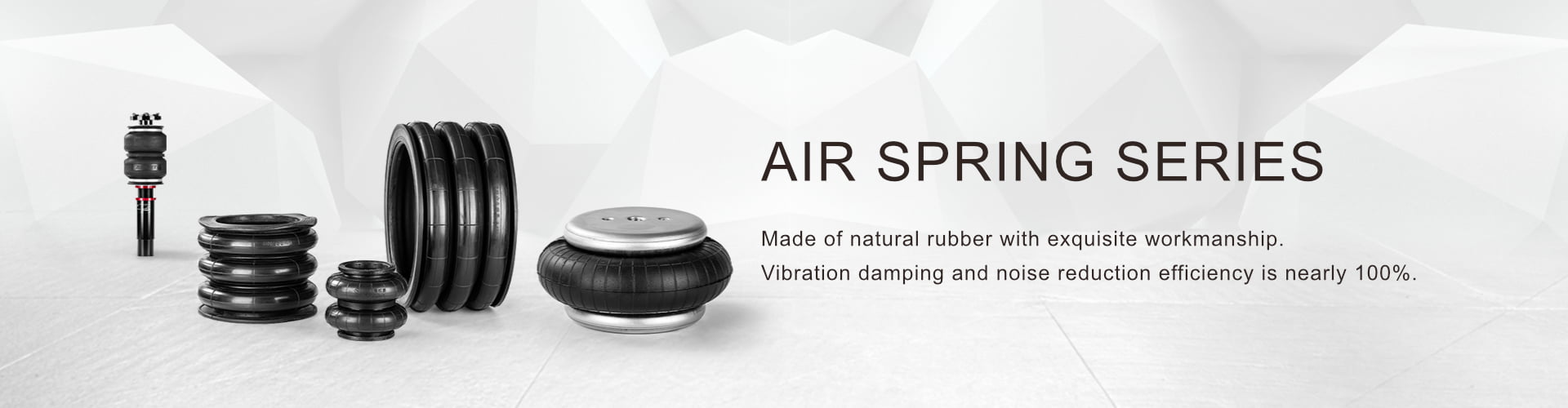
How Is Smart Air Isolation Shaping the Future of Precision Manufacturing?
How Is Smart Air Isolation Shaping the Future of Precision Manufacturing?
From passive pneumatic supports to intelligent vibration control, digital twin engineering, and six-degree-of-freedom precision isolation.
1. Introduction: A New Era of Intelligent Vibration Isolation
The evolution of modern manufacturing is placing unprecedented demands on mechanical stability.
Semiconductor lithography equipment, high-resolution optical inspection systems, electron microscopes, laser interferometers, and advanced coordinate measuring machines (CMMs) increasingly operate in environments where microscopic disturbances can affect measurement accuracy, repeatability, and process reliability.
Traditional vibration isolation systems are designed primarily to reduce the transmission of mechanical disturbances through passive elastic and damping elements.
Although these technologies remain essential, modern precision manufacturing introduces more complex requirements, including changing payloads, multi-axis vibrations, low-frequency disturbances, and interactions between equipment structures and their surrounding environments.
A new generation of vibration isolation research is addressing these challenges by integrating pneumatic support mechanisms with electronic sensing, feedback control, computational modeling, and intelligent monitoring.
This emerging approach is commonly associated with smart air isolation technology.
Rather than treating vibration isolators as independent mechanical components, engineers are beginning to consider them as integrated elements within the larger precision manufacturing system.
2. What Makes an Air Isolation System Intelligent?
A conventional pneumatic vibration isolator uses compressed air to support equipment and provide mechanical compliance.
Its isolation performance depends on parameters such as effective air volume, pressure, diaphragm geometry, load distribution, and damping characteristics.
An intelligent isolation architecture can introduce additional sensing and control capabilities.
These may include pressure transducers, displacement sensors, accelerometers, electronically controlled pneumatic valves, digital controllers, and data acquisition systems.
The functions of these components differ.
Pressure sensors monitor the pneumatic operating condition. Position sensors measure changes in platform height or displacement. Accelerometers detect dynamic motion. Controllers process measurement signals and generate appropriate commands for valves or other actuators.
Together, these technologies can support automatic leveling, vibration monitoring, adaptive pressure regulation, and—in systems equipped with suitable dynamic actuators—active vibration cancellation.
However, automatic leveling and active vibration isolation should not be confused.
A pneumatic leveling system may maintain a stable operating height without dynamically canceling floor vibration. True active isolation requires sufficient actuator bandwidth, suitable feedback or feedforward control, and verified closed-loop stability.
3. The Technical Breakthrough: From Passive Isolation to Hybrid Active Control
One of the most important developments in precision vibration engineering is the combination of passive pneumatic isolation with active control.
In a hybrid architecture, pneumatic elements provide static load support and passive mechanical compliance, while additional actuators generate corrective forces in response to measured disturbances.
A simplified dynamic model can be expressed as:
Where:
-
\(M\) represents the supported mass.
-
\(C\) represents equivalent damping.
-
\(K\) represents effective stiffness.
-
\(F_d\) represents external disturbance force.
-
\(F_c\) represents the control force applied by the active system.
The controller aims to generate an appropriate corrective force to reduce the equipment’s response to disturbances.
Feedback and Feedforward Control
Feedback control uses measured system motion to calculate corrective action.
Feedforward control uses information about measurable disturbances to compensate for their effects before they propagate through the system.
Both methods have advantages and limitations.
Feedback control can respond to disturbances that are not known in advance, but its effectiveness is constrained by sensor noise, actuator dynamics, control bandwidth, and stability requirements.
Feedforward control can be effective when suitable disturbance reference signals are available, but performance depends on the accuracy of the reference measurements and the system model.
Hybrid strategies can combine these methods to address different frequency ranges and operating conditions.
A Research Example from 2026
A study published in the International Journal of Mechanical Sciences in July 2026 investigated an ultra-low-frequency pneumatic–mechanical–electrical active vibration isolator.
The researchers reported natural frequencies below 0.5 Hz in three translational directions and an isolation efficiency of 99.55% at 10 Hz under the reported experimental conditions. Their hybrid control approach also reduced internal resonance peaks by more than 15 dB.
These results illustrate the potential of integrating pneumatic structures, quasi-zero stiffness mechanisms, and advanced algorithms.
They are research-specific findings and should not be interpreted as performance guarantees for conventional commercial air isolators.
4. Six-Degree-of-Freedom Isolation: Beyond Vertical Vibration Control
Traditional equipment mounting calculations frequently focus on vertical load and vertical natural frequency.
However, precision manufacturing systems can experience motion in six rigid-body degrees of freedom.
These consist of three translational directions—X, Y, and Z—and three rotational directions—roll, pitch, and yaw.
In a multi-support isolation platform, the dynamic behavior depends on the distribution of mass, moments of inertia, support locations, and the stiffness characteristics of individual isolators.
The governing equations can be expressed as:
Here, \(\mathbf{q}\) contains the generalized translational and rotational coordinates, while \(\mathbf{B}\mathbf{u}(t)\) represents the generalized forces generated by the control actuators.
Why Cross-Axis Coupling Matters
A disturbance acting in one direction can produce motion in another direction because of geometric coupling or unequal stiffness distribution.
For example, horizontal floor motion may generate platform rotation when the supported equipment has a relatively high center of gravity.
Similarly, unequal support stiffness may couple vertical translation with pitch or roll.
Advanced isolation systems can use modal analysis, system identification, and decoupling control to address these interactions.
A 2026 study published in the Journal of Vibration and Shock investigated stiffness identification and decoupling control for a six-degree-of-freedom precision isolation platform. The experimental results demonstrated an improvement in the study’s multi-axis vibration performance metric.
This research highlights an important direction for future pneumatic isolation platforms: engineering the entire mechanical system rather than optimizing each support independently.
5. Digital Twin Technology: A New Approach to Vibration Isolation Engineering
A digital twin is a computational representation of a physical system that can be updated using information from the actual equipment.
In vibration isolation engineering, a digital twin may incorporate the equipment’s mass properties, support geometry, stiffness, damping, measured vibration response, and operating conditions.
Unlike a static engineering model, a properly implemented digital twin can be updated as new measurements become available.
How a Digital Twin Can Improve Isolation Design
The process may begin with a mechanical model of the equipment and its supporting isolation platform.
Engineers can then calculate natural frequencies, mode shapes, and predicted vibration transmissibility.
After installation, sensors collect information about the actual vibration response.
These measurements can be used to identify discrepancies between predicted and observed behavior.
The model can subsequently be refined to improve its representation of the physical system.
Digital Twin–Enabled Isolation Engineering
Physical Isolation Platform
Air isolators · Precision equipment · Foundation
Sensor Data Acquisition
Acceleration · Displacement · Pressure
Dynamic Model & Digital Twin
System identification · Modal analysis · Simulation
Engineering Optimization
Stiffness · Damping · Support configuration
Validation & Model Updating
Compare predictions with measured performance
Conceptual workflow. Automated closed-loop optimization requires appropriate instrumentation, software integration, and validation.
A 2026 study on digital twin-based optimization of industrial vibration isolation equipment explored how updated computational models can support the design of multi-dimensional isolation platforms under changing operating conditions.
The wider engineering significance is that vibration isolation design can evolve from a one-time calculation into an iterative, measurement-informed process.
6. Quasi-Zero Stiffness and Adaptive Pneumatic Pressure Control
Another important research direction is the development of quasi-zero stiffness (QZS) vibration isolation.
A QZS system seeks to provide substantial static load-bearing capacity while maintaining very low incremental dynamic stiffness near its operating equilibrium.
This is particularly attractive for precision manufacturing because conventional low-stiffness supports may experience excessive static deflection or instability.
Pneumatic systems provide opportunities to influence effective stiffness through air pressure, chamber volume, mechanical geometry, and pressure control.
For an idealized pneumatic chamber:
Where \(n\) is the effective polytropic exponent, \(P\) is absolute pressure, \(A\) is effective area, and \(V\) is effective air volume.
This simplified expression does not include all diaphragm, geometry, or flow-dependent effects, but it demonstrates why pneumatic stiffness is strongly influenced by air chamber characteristics.
In February 2026, research published in Measurement demonstrated a pressure-control approach that reduced the natural frequency of a tested pneumatic isolator from 5.75 Hz to 2.75 Hz. Additional acceleration feedback improved the reported vibration attenuation at 10 Hz.
The technical importance of this work is the possibility of modifying effective pneumatic stiffness through control methods rather than relying exclusively on mechanical redesign.
7. Applications in Modern Precision Manufacturing

Semiconductor Manufacturing
Semiconductor inspection, lithography-related metrology, and precision wafer positioning equipment may require isolation from low-frequency environmental disturbances. Intelligent isolation concepts can support multi-axis analysis and vibration monitoring.

Optical Metrology and Laser Measurement
Laser interferometers, optical measurement platforms, and high-resolution alignment instruments benefit from stable mechanical reference structures. Isolation performance must be evaluated against the instrument’s sensitivity and measurement bandwidth.

Coordinate Measuring Machines
CMM installations can benefit from carefully engineered vibration isolation and support stability. Dynamic payload shifts, moving axes, and measurement repeatability should be included in the design assessment.

Electron Microscopy and Scientific Instruments
High-resolution microscopes and analytical instruments may require coordinated management of structural vibration, acoustic noise, electromagnetic interference, and thermal stability.
8. Engineering Challenges Before Smart Isolation Can Be Widely Adopted
Although intelligent vibration isolation offers significant potential, several practical engineering challenges remain.
Sensor Accuracy and Noise
Very-low-frequency motion measurements can be affected by sensor drift, noise, and calibration uncertainty.
The measurement system must be appropriate for the expected vibration amplitudes and frequency range.
Control-System Stability
Feedback systems introduce additional dynamic behavior.
Poorly tuned controllers may amplify disturbances or excite structural resonances instead of suppressing them.
Control design must therefore consider actuator bandwidth, phase delay, mechanical resonance, and stability margins.
Pneumatic Response Limitations
Pneumatic valves, air lines, reservoirs, and chambers have finite response times.
These limitations influence the achievable control bandwidth and may require supplementary electromechanical actuators for faster corrective action.
Reliability and Maintenance
Industrial deployment requires attention to air quality, leakage, sensor reliability, calibration, electrical power, and failure-safe behavior.
A practical intelligent isolation system must deliver not only laboratory performance but also reliable long-term operation.
9. Frequently Asked Questions
What is a smart air isolator?
A smart air isolator is a pneumatic isolation system incorporating sensing, monitoring, or control functions beyond basic passive load support.
Depending on its architecture, these functions may include automatic leveling, pressure monitoring, dynamic response measurement, or active vibration suppression.
The term does not imply that every smart isolator contains a full active vibration cancellation system. Actual functionality should be confirmed from the manufacturer’s technical specifications.
Can artificial intelligence improve vibration isolation?
Artificial intelligence and machine-learning methods may support vibration classification, anomaly detection, parameter estimation, and adaptive modeling.
For example, historical vibration data could be analyzed to identify changes in equipment behavior or recurring environmental disturbances.
However, AI does not automatically improve isolation performance. Any control strategy must be validated for stability, robustness, and real-world operating conditions.
Is active vibration isolation better than passive pneumatic isolation?
Not necessarily.
Passive pneumatic isolation can be highly effective when its natural frequencies, damping characteristics, and load capacity are appropriate for the application.
Active isolation may provide additional benefits when disturbances occur in frequency ranges that are difficult to control passively.
However, active systems introduce additional complexity, cost, maintenance requirements, and potential failure modes.
The most suitable approach depends on the actual performance requirements.
What is the advantage of a digital twin in vibration isolation design?
A digital twin can provide an updated representation of an isolation system using measured operating data.
It may help engineers identify changes in stiffness, damping, modal behavior, or environmental excitation.
This can support design refinement, troubleshooting, and condition monitoring.
Its usefulness depends on the accuracy of the underlying model, quality of sensor data, and the ability to validate predictions against physical measurements.
Can six-axis vibration isolation improve semiconductor equipment stability?
Six-axis isolation can be beneficial when a machine is sensitive to both translational and rotational disturbances.
However, performance depends on the machine’s structural dynamics, the isolator configuration, and the control system.
A six-axis architecture does not automatically guarantee superior isolation. The relevant vibration modes and equipment acceptance criteria must be identified and verified.
What information is needed to develop a customized intelligent isolation system?
Engineers typically require the equipment’s total mass, center of gravity, moments of inertia, support locations, vibration sensitivity, environmental vibration spectrum, and operating conditions.
For active systems, additional information about allowable motion, required control bandwidth, actuator capacity, sensor placement, and safety requirements is necessary.
A complete engineering assessment may involve analytical modeling, simulation, prototype testing, and on-site verification.
10. Conclusion: The Future of Vibration Isolation Is System-Level Intelligence
Precision manufacturing is moving toward increasingly integrated mechanical, electronic, and computational systems.
As measurement accuracy and production requirements continue to advance, vibration isolation technology must address challenges that extend beyond conventional load support.
Smart pneumatic isolation represents an important engineering direction because it can combine the mechanical advantages of compressed-air supports with sensing, system identification, adaptive control, and digital modeling.
Research in quasi-zero stiffness, six-degree-of-freedom control, and hybrid active isolation is expanding the possibilities for managing low-frequency disturbances.
Nevertheless, successful industrial application requires careful design, realistic performance specifications, and experimental validation.
The future of precision vibration isolation will depend not only on developing better isolators, but also on understanding and controlling the dynamic behavior of the complete manufacturing system.
Airisolator — Advancing Vibration Isolation Engineering for Precision Manufacturing.
For industrial air isolators, pneumatic vibration isolation solutions, and customized equipment support requirements, please contact us.
Website: https://airisolator.com/
Email: [email protected]
Related Keywords: Smart Air Isolator, Active Vibration Isolation, Intelligent Pneumatic Isolator, Digital Twin Vibration Control, Six-Axis Vibration Isolation, Hybrid Isolation System, Semiconductor Vibration Isolation, Precision Air Suspension, Adaptive Vibration Control, Industrial Vibration Monitoring